
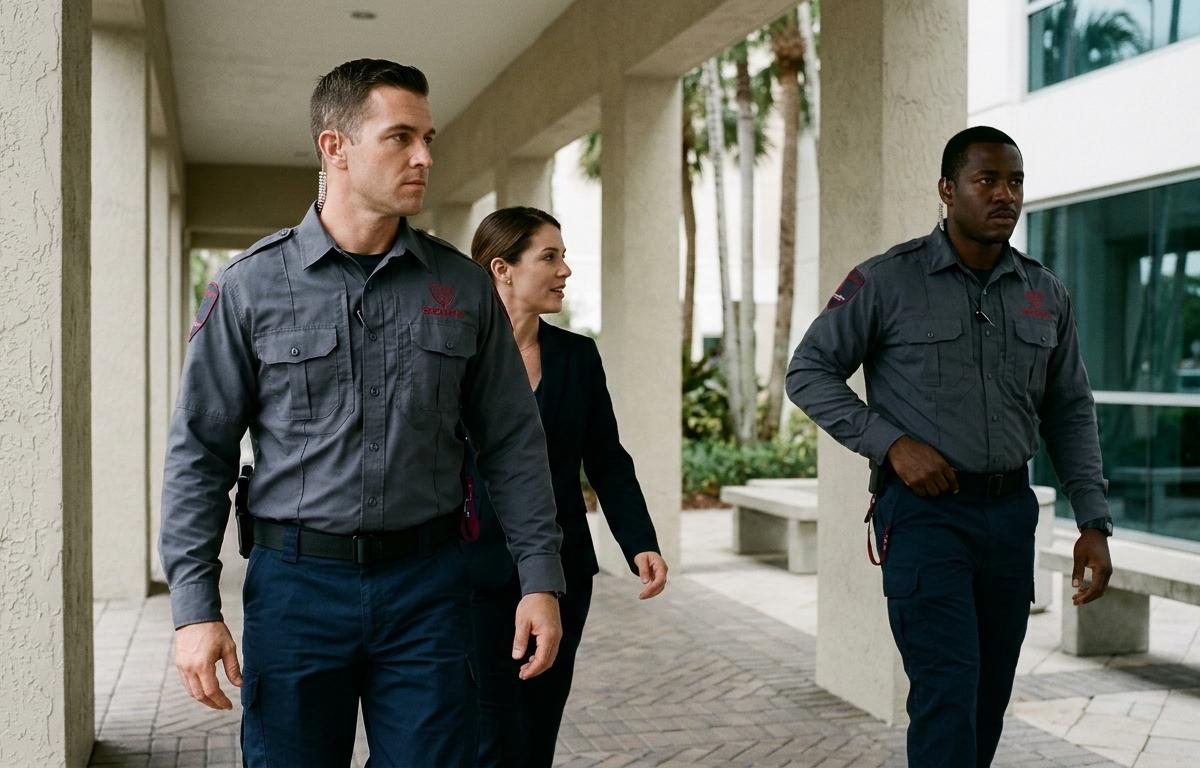
In Florida, learning how to become a bodyguard starts with a licensing process, and skills-building comes second. Before step 1, gather the following:
Veterans and former law enforcement officers should bring their service records and discharge paperwork. Those documents can support experience claims and, in some cases, firearms-training exemptions.
Start by learning who regulates the work. Florida licenses private security through the Florida Department of Agriculture and Consumer Services (FDACS), Division of Licensing, under Chapter 493 of the Florida Statutes. Plenty of people researching how to become a bodyguard assume a famous close-protection course is the credential. In Florida, it isn’t. A course certificate shows training; only a state license authorizes you to do paid protection work.
The statute is blunt about it. Under Florida Statutes §493.6301, anyone who performs the services of a security officer must hold a Class "D" license. The same section says a Class "C" or Class "CC" licensee may perform bodyguard services without a Class "D" license. Those two are investigator licenses, so they matter if you’re coming from private investigation rather than security. For most newcomers, the Class D is the way in.
Firearms add another layer. Only Class "M," "MB" or "D" licensees may bear a firearm, and any who do must also hold a Class "G" license. Armed bodyguard work, in other words, means a baseline license first and the firearm license on top.
One more point of clarity. Florida’s concealed-carry rules changed on July 1, 2023, when a license was no longer required to carry a concealed firearm in most circumstances, as summarized in Gun laws in Florida. That change does not let you work as an armed professional. Carrying for personal reasons and carrying on the job under a security license are separate legal categories, and the Class G covers the second.
The Class D security officer license is the foundation of almost every bodyguard career path in Florida. The process has four parts.
Take the 40-hour course. Applicants complete 40 hours of training at an FDACS-licensed Class DS school and pass the course exam. It’s one course now; the older two-part structure was retired in 2018. Before paying tuition, confirm the school holds a current Class DS license.
Submit fingerprints. Your prints are scanned electronically and sent for state and federal background checks. Sheriff’s offices, FDACS regional offices and approved Livescan vendors all offer the service. Expect a separate processing fee.
File the application and pay state fees. Published figures vary by source. One training vendor lists the Class D license fee at $45, while another puts the all-in cost near $97.75, probably because fingerprint charges are bundled in. Because the totals differ, check the current fee schedule on the FDACS website before you budget.
Start working once your application is complete. One training provider says that once FDACS has a complete application on file, you may work for a licensed security agency while it’s processed. Verify that with the agency and with FDACS before accepting any post, since employers set their own policies.
Be realistic about what the Class D gets you. It qualifies you for unarmed security officer work, and many agencies treat unarmed posts as the proving ground for protection roles. At National Alert Security, which staffs security officers alongside bodyguard services, the licensed-officer foundation is where protection careers typically begin.
Not every bodyguard carries a firearm, so make the call deliberately. Armed work generally pays more and opens doors to higher-risk assignments, but it brings extra training, cost, liability and ongoing requirements. Weigh it against the clients you want to serve: a corporate executive in a high-rise has different needs than a high-net-worth family in a gated Palm Beach estate.
If you choose armed work, here’s what the state requires. Under FDACS’s Class G requirements, applicants submit proof of an initial course that includes 28 hours of classroom and range training. To keep the license, you must complete four hours of requalifying training each year and pass a cycle of fire of 48 rounds. Training vendors report that part of the 28 hours may be completed live online, while the range portion must be done in person, and that fully self-paced or prerecorded courses don’t count. Confirm the exact split with the school and FDACS.
A few practical rules shape your planning:
Finally, a Class G doesn’t give you general permission to carry a firearm as a private person. It authorizes carrying on the job as a licensed armed officer.
Knowing how to become a bodyguard means more than holding a license. A license makes you eligible. It doesn’t make you good. Clients hiring for personal protection judge you on judgment, composure and preparation, and none of those come from a 40-hour course. This is the step where most careers are won or lost.
Add specialized training. Executive protection courses cover advance work, route planning, protective formations, driving, medical response and threat assessment. Some programs accept students with no prior protection experience, so they can be a sensible second step after licensing. Treat any course as a skill-builder, not a substitute for the Florida license, and compare tuition against what it actually teaches. Practical preparedness training helps too; our survival training offerings cover the hands-on readiness skills that complement formal protection coursework.
Work your way up through posts. Many experienced protection professionals started on commercial, residential or transportation posts, learning to observe, document and de-escalate before taking on principals. Posts in commercial security or residential security build habits that protection work depends on: punctuality, report writing, calm communication and situational awareness.
Develop the non-tactical skills. Principals value discretion, professional appearance, customer service and the ability to blend in at a charity gala as easily as at a courthouse. Physical fitness matters, but so do first aid and CPR, defensive driving and clear radio and phone communication.
Know what agencies look for. Our research turned up no authoritative survey of hiring criteria, so take this as practical experience rather than a rule. Agencies and principals tend to favor candidates with a clean record, a verifiable work history, military or law enforcement backgrounds where applicable, and references who can speak to reliability. Veterans often transition well because of their training in disciplined, team-based operations, which is one reason a veteran-led firm like National Alert Security draws heavily from former military and law enforcement.
If you eventually want to run your own operation, FDACS describes the manager license pathway, including how Class M, MA and MB requirements consider verifiable experience, with relevant military training counted in some cases. That’s a long-range goal, not a first-year plan.
Put numbers and dates on the plan. Costs and timelines vary, so treat the figures below as ranges to verify.
Budget categories. Expect to pay for Class D tuition, state license and fingerprint fees, and, if you’re going armed, Class G tuition, a range fee and the Class G state fees. One academy lists a 28-hour G course at $225 in tuition, with another vendor noting an extra range fee of roughly $25; a different provider’s published all-in state total for the Class G is $164.75. Prices change, so confirm with each school and with FDACS. Add costs for ammunition, a duty-appropriate firearm and holster if required, professional clothing and transportation.
Timeline. No single sourced answer exists for how long the whole process of learning how to become a bodyguard takes. A reasonable way to think about it is in phases: complete the 40-hour course, submit the application and fingerprints, take the firearm course if armed, then wait for FDACS processing. Working under a licensed agency during processing may speed your start, subject to the caveats in Step 2. Leave extra room for scheduling range sessions and any follow-up requests from FDACS.
South Florida logistics. Miami-Dade, Broward and Palm Beach counties have no shortage of licensed schools, but class calendars and range availability fill unevenly, and travel between counties can be long. Check schedules early, confirm the school is FDACS-licensed, and ask where the live range session takes place so the drive doesn’t catch you off guard. Fingerprinting is available at sheriff’s offices, FDACS offices and approved Livescan providers across the region.
Vet your future employer. Before accepting a post, make sure the agency is licensed and ask how it supports training, promotion and advancement into protection assignments. Our guide on how to vet a licensed executive protection firm works just as well from the candidate’s side, and if you’re curious about market pay, read how much a bodyguard costs to see what clients typically pay.
Once your license is in hand, you can also explore executive protection and personal security career tracks, or contact us to ask how a licensed, veteran-owned agency approaches hiring and development.